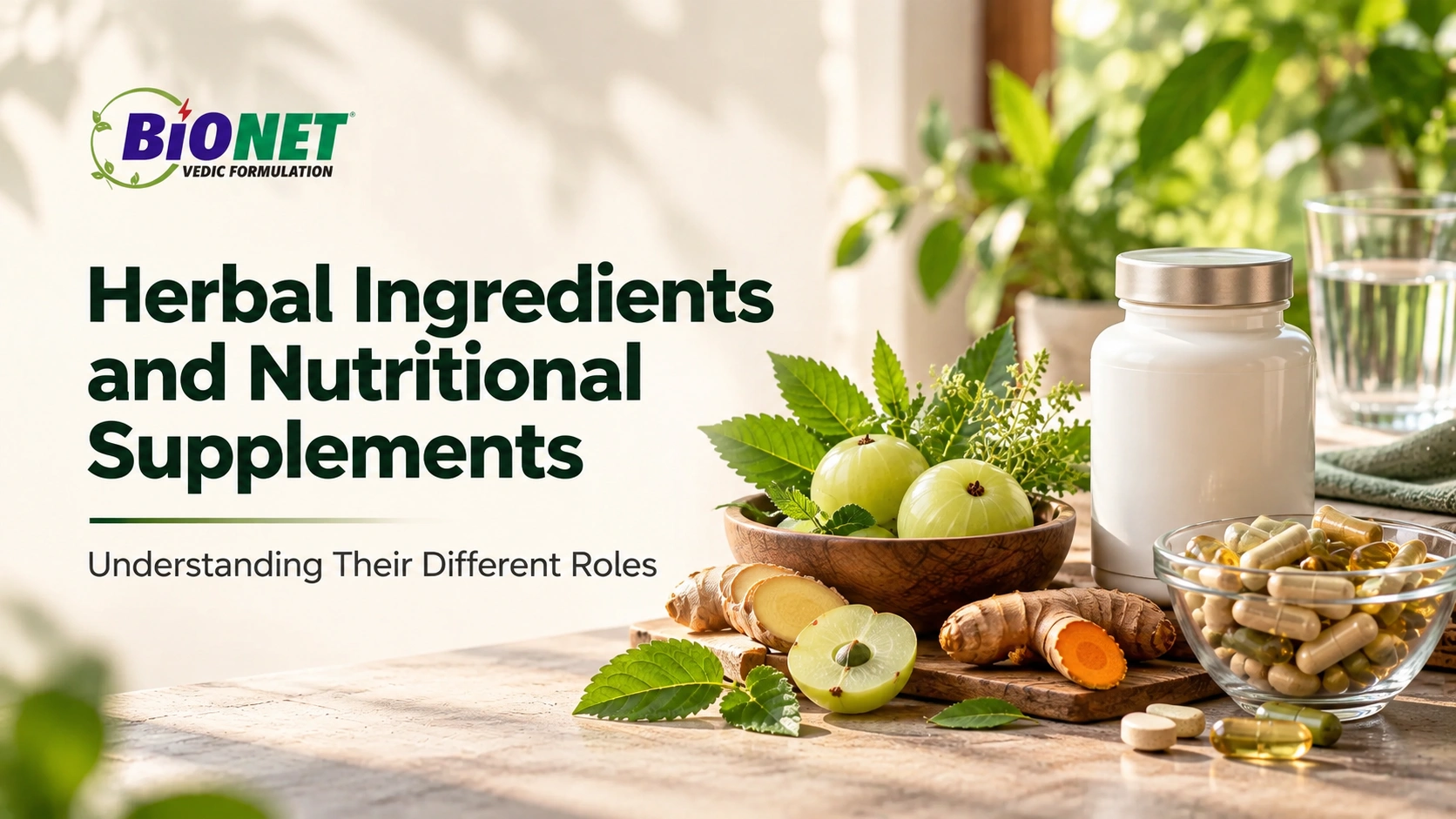
Herbal Ingredients and Nutritional Supplements: Understanding Their Different Roles
Have you ever picked up a herbal product because it says “natural” on the packaging, or considered a nutritional supplement because you wanted to improve your daily diet? You are not alone. Many people see herbal ingredients and nutritional supplements as interchangeable, but they do not always serve the same purpose.
Understanding the difference can help you make better-informed decisions about the products you buy. It can also help you look beyond marketing claims and understand what a formulation actually contains, how it is intended to be used and what information you should check before using it.
In this guide, we will explain herbal ingredients, nutritional supplements, their similarities, their differences and the practical questions worth asking before choosing a product.
Table of Contents
What Are Herbal Ingredients?
Herbal ingredients are substances obtained from plants and used in products for a range of purposes, including traditional wellness practices, food preparation, personal care and herbal formulations. Depending on the ingredient, the plant part used may include its roots, leaves, flowers, seeds, bark or fruit.
For example, ginger is widely used in cooking and traditional wellness practices. Amla is used in foods and traditional Ayurvedic formulations, while Shatavari appears in some traditional herbal products. The way an ingredient is prepared and used can differ significantly from one product to another.
An ingredient’s traditional use does not automatically establish that it will produce a particular health outcome. Its effects depend on factors such as its composition, preparation, amount used, the person taking it and the evidence available for the specific use.
Common examples of herbal ingredients
- Amla: A fruit used in food and traditional formulations. It contains vitamin C, although the amount retained depends on processing and preparation.
- Ginger: A culinary ingredient also used in traditional practices and studied for certain health-related applications.
- Shatavari: A plant used in traditional Ayurvedic formulations, including some products intended for women’s wellness.
- Ashwagandha: An herb investigated in scientific research for several potential effects, with evidence and safety considerations varying by use.
- Turmeric: A culinary spice containing curcuminoids, including curcumin, which has been studied for various biological effects.
These examples illustrate different types of botanical ingredients, not a list of proven treatments. The available evidence, appropriate use and potential risks differ for each ingredient.
What Are Nutritional Supplements?
Nutritional supplements are products intended to supplement a person’s diet. Depending on the market and the product’s regulatory classification, they may contain vitamins, minerals, amino acids, herbs, botanical extracts or other dietary ingredients.
They may be sold in tablets, capsules, powders, granules or liquids. Their purpose depends on the ingredients and the product’s intended use. For example, a vitamin supplement may provide a specific nutrient, while a multinutrient formulation may combine several vitamins and minerals.
A supplement is not automatically necessary for everyone. Whether someone needs a particular nutrient depends on their dietary intake, individual circumstances and, where appropriate, professional assessment.
According to the US National Center for Complementary and Integrative Health, herbal supplements are a type of dietary supplement containing one or more herbs. The exact legal definition and permitted claims can vary across countries.
Common types of nutritional supplements
1. Vitamin supplements
These provide one or more vitamins, such as vitamin B12, vitamin D or vitamin C. They may be useful in specific circumstances, including when dietary intake is inadequate or a deficiency has been identified.
2. Mineral supplements
These contain minerals such as iron, calcium, zinc or magnesium. The appropriate choice depends on the person’s nutritional requirements and health circumstances.
3. Multivitamin and multimineral formulations
These combine several vitamins and minerals in a single product. The amounts and combinations vary by formulation, so reading the label matters.
4. Botanical or herbal supplements
These contain herbs or plant-derived ingredients. Some may also contain vitamins, minerals or other nutrients, which means a single product can fit more than one descriptive category.
Herbal Ingredients vs Nutritional Supplements: What Is the Difference?
The simplest way to understand the difference is to distinguish an ingredient from a finished product.
An herbal ingredient describes a substance derived from a plant. A nutritional supplement describes a product intended to supplement the diet under the relevant regulatory framework. A herbal ingredient may be used in a supplement, but not every herbal product is a nutritional supplement.
| Feature | Herbal Ingredients | Nutritional Supplements |
|---|---|---|
| What the term describes | Plant-derived ingredients | Finished products intended to supplement the diet |
| Typical examples | Ginger, amla, turmeric, Shatavari | Vitamin D tablets, iron supplements, multivitamins |
| Source | Plants or plant parts | Vitamins, minerals, botanicals and other permitted ingredients |
| Product formats | Raw ingredients, extracts, oils or formulation ingredients | Tablets, capsules, powders, liquids and other formats |
| Main consideration | Identity, preparation, composition, intended use and safety | Nutritional purpose, composition, dosage, label directions and safety |
| Evidence to consider | Research on the specific plant preparation and intended use | Research on the specific nutrient or formulation and intended use |
The categories can overlap. A capsule containing a botanical extract may be described as an herbal supplement. A product containing both botanical ingredients and vitamins may combine herbal and nutritional components.
That overlap is precisely why the product label matters more than the front-of-pack marketing language.
Can an Herbal Ingredient Also Be a Nutritional Supplement?
Yes. A plant-derived ingredient can be included in a product that is marketed and regulated as a dietary or nutritional supplement, provided the applicable requirements are met.
Consider a formulation containing a botanical extract alongside vitamins and minerals. The botanical ingredient contributes the plant-derived component, while the vitamins and minerals provide additional nutrients. The finished product must be assessed as a whole, including its composition, intended use, dosage and applicable regulatory classification.
The same plant may also appear in different forms, such as a culinary ingredient, a traditional herbal preparation or a concentrated extract. These forms are not automatically equivalent. Processing can affect the constituents present, and evidence about one preparation may not apply to another.
This is why consumers should avoid assuming that a product will have the same effects as the whole plant or as another formulation containing the same ingredient.
How to Read a Herbal or Nutritional Supplement Label
A product label can tell you far more than whether a formulation is described as herbal, natural or nutritional. Before purchasing a product, review the following details.
1. Check the complete ingredient list
Look for the names of the ingredients and the quantities provided, where disclosed. For botanical products, the plant name, plant part and extract details can help distinguish between different preparations.
If a label uses a proprietary blend or does not disclose enough information to understand the composition, seek clarification from the manufacturer or a qualified healthcare professional.
2. Understand the intended use
Check what the product is designed for and whether the intended use is supported by the product’s approved labelling and relevant evidence. General wellness language should not be interpreted as proof that a product can prevent, diagnose or treat a disease.
3. Follow the directions and warnings
Review the recommended serving or dosage, method of use, age restrictions, warnings, storage conditions and expiry date. Do not increase the amount simply because an ingredient is plant-derived or described as natural.
4. Look for manufacturer and regulatory information
Check the manufacturer’s identity, batch details, applicable licence or registration information and contact details. Requirements differ according to the product category and the country where it is sold.
A quality certificate or laboratory report can be useful, but it is important to understand exactly what it covers. A document relating to a manufacturing facility does not automatically establish the clinical effectiveness of every product made there.
5. Consider potential interactions
Herbal products and nutritional supplements can interact with prescription medicines and over-the-counter medicines. Some may also be unsuitable for people with certain medical conditions or for those preparing for surgery.
If you take medication, are pregnant or breastfeeding, or are considering a supplement for a child, ask an appropriately qualified healthcare professional before use. The NCCIH provides additional guidance on the safe use of complementary health products.
How to Choose the Right Product for Your Needs
Imagine that two products are displayed side by side. One highlights traditional herbs, while the other lists vitamins and minerals. Which should you choose?
The answer depends on what you need, what the product contains and whether there is a sound reason to use it. Packaging alone cannot establish which product is appropriate for you.
Start by identifying your goal. Are you trying to address a known nutritional deficiency, understand a botanical formulation or simply learn more about a product category? Different questions require different approaches.
Next, review the composition and available evidence. For nutritional supplements, consider whether the nutrients are relevant to your dietary needs. For herbal formulations, look for information about the exact ingredients, preparation, intended use and known precautions.
Finally, consider the product’s quality documentation and the reliability of the information provided. Be cautious of claims promising guaranteed results, rapid cures or benefits that sound too broad to be credible. A responsible product description should explain what is known, what remains uncertain and how the product is intended to be used.
For further reading, the NIH Office of Dietary Supplements provides evidence-based information about vitamins, minerals and other supplement-related topics.
Exploring Herbal and Nutritional Formulations at BioNet Vedic
BioNet Vedic offers a range of Ayurvedic and herbal formulations across several product categories. For readers who want to understand how different formulation types are presented, the company’s product range is a useful starting point.
For example, the Biocharge Gold Capsules product page lists ginseng, lycopene, selenium and vitamins in its formulation description. This illustrates how a single product can combine a botanical ingredient with nutritional components. However, the presence of an ingredient does not by itself establish that the finished product delivers a particular health outcome. Readers should review the full product label, quantities, intended use and warnings before making a decision.
You can also explore the BioNet Vedic company profile to learn more about the brand and its stated approach to Ayurvedic formulations.
The goal is not to choose a product simply because it contains herbs or nutrients. It is to understand the formulation, check the relevant information and make a decision that fits your individual circumstances.
Frequently Asked Questions
Learn about herbal ingredients, nutritional supplements, product labels and responsible product selection.
1. Are herbal ingredients and nutritional supplements the same?
No. Herbal ingredients are substances derived from plants, while nutritional supplements are finished products intended to supplement the diet. Supplements may contain herbs, vitamins, minerals or a combination of ingredients. The exact classification depends on the product, its intended use and applicable regulations.
2. Are all herbal supplements natural and safe?
No. Plant-derived ingredients can cause side effects, allergic reactions or interactions with medicines. Safety depends on the specific ingredient, preparation, amount used and individual circumstances. Read the product label and consult a qualified healthcare professional when necessary.
3. Can nutritional supplements contain herbal ingredients?
Yes. Some nutritional or dietary supplements contain botanical ingredients alongside vitamins, minerals or other permitted ingredients. Check the complete ingredient list, quantities where provided, intended use and warnings to understand what a particular formulation contains.
4. How do I know whether I need a nutritional supplement?
Your nutritional needs depend on your diet, health circumstances and whether you have a nutrient deficiency or increased nutritional requirements. A healthcare professional can help you determine whether supplementation is appropriate and which option may suit your needs.
5. Can herbal products interact with medicines?
Yes. Certain herbal ingredients can affect how medicines work or increase the risk of side effects. Tell your healthcare professional about all herbal products, prescription medicines and supplements you use before starting a new formulation.
6. What should I check before buying a herbal product?
Review the ingredient list, intended use, directions, warnings, expiry date, manufacturer details and applicable regulatory information. For botanical products, check available information about the plant species, plant part and preparation. Avoid relying on unsupported health claims.
7. What is the difference between an herbal extract and a whole herb?
A whole herb contains its naturally occurring plant components, while an extract is prepared using a process designed to concentrate or separate particular constituents. Their composition and strength can differ. Products made from different preparations should not automatically be considered equivalent.
8. Can herbal ingredients replace vitamins and minerals?
Not necessarily. Herbs and essential nutrients have different compositions and roles. Some plant foods provide vitamins or minerals, but a herbal ingredient is not automatically a substitute for a nutrient supplement. Address suspected deficiencies with appropriate professional advice rather than self-prescribing.
9. How should herbal and nutritional supplements be stored?
Follow the storage instructions printed on the product label. Keep products away from unsuitable temperatures, moisture and direct sunlight where specified. Store them securely away from children, and do not use products beyond their expiry date or when packaging appears damaged.
10. Where can I explore BioNet Vedic’s herbal formulations?
You can explore the BioNet Vedic product range to learn about available formulations. Review each product’s label, composition, intended use and precautions before making a purchase. For questions about a specific product, contact the company through its official website.