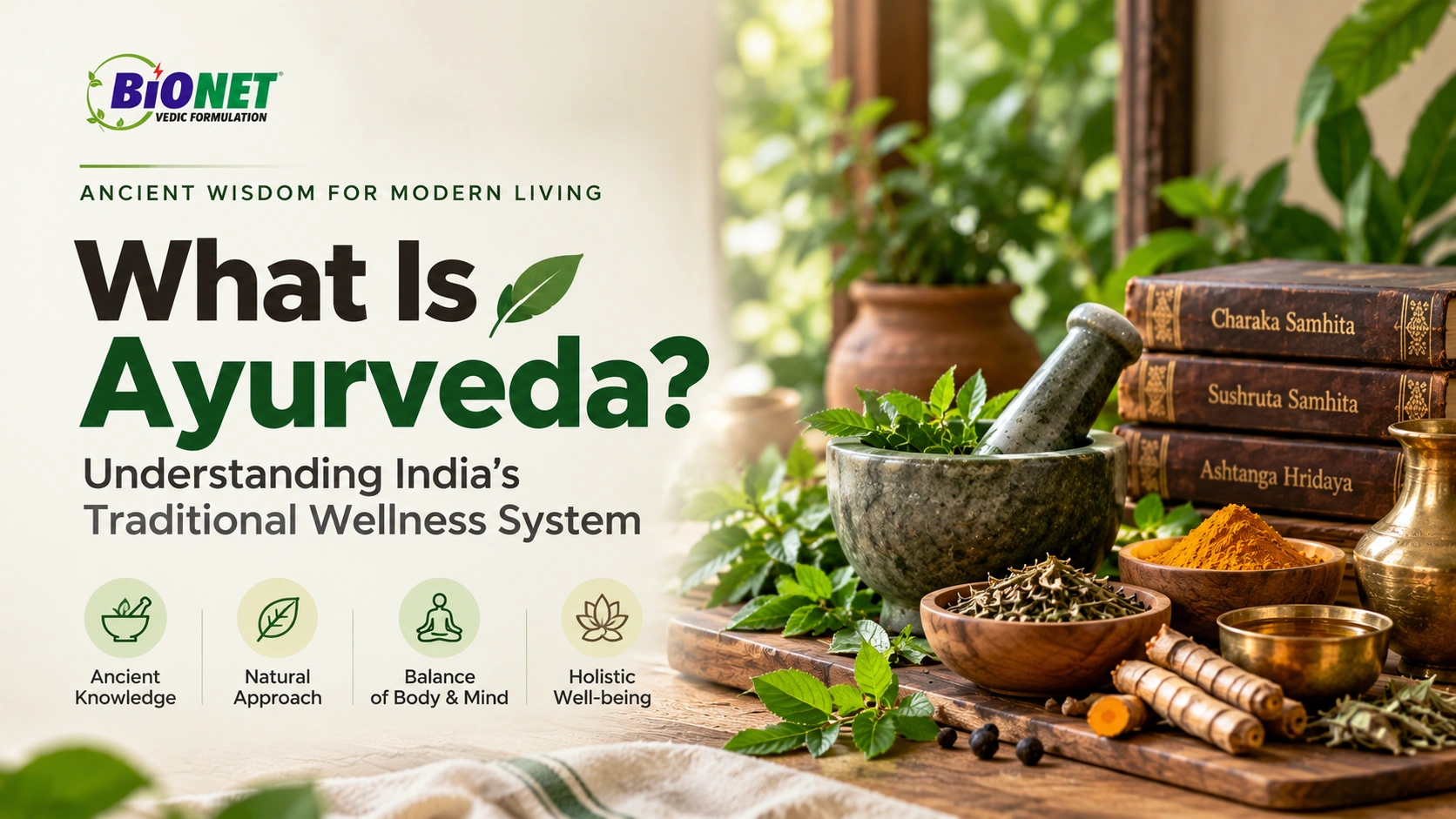
What Is Ayurveda? Understanding India’s Traditional Wellness System
Have you ever noticed how a poor night’s sleep can affect your energy, how stressful days can change your appetite, or how your daily habits influence the way you feel? These everyday experiences remind us that well-being is influenced by more than one factor. Our routines, food choices, environment, rest, and access to appropriate healthcare all play a role.
This is one reason Ayurveda continues to attract interest in India and around the world. Rooted in India’s traditional knowledge, Ayurveda offers a distinctive way of thinking about health, daily habits, and individual well-being. Its approach considers the relationship between the body, mind, lifestyle, and surrounding environment.
But what exactly is Ayurveda? Where did it originate, what are its fundamental principles, and how should someone approach Ayurvedic products today? Let’s explore the traditional system, its relevance to modern life, and the importance of making informed wellness choices.
Table of Contents
What Is Ayurveda?
Ayurveda is a traditional system of medicine that originated in the Indian subcontinent. The word comes from two Sanskrit terms: Ayus, commonly translated as life or lifespan, and Veda, meaning knowledge or understanding. Ayurveda is therefore commonly described as the “knowledge of life.”
Rather than viewing well-being only through individual symptoms, classical Ayurvedic thought considers several aspects of a person’s life, including diet, daily routines, sleep, activity, and the relationship between the individual and their environment. Traditional Ayurvedic practice also includes specific concepts about bodily constitution, health, and the use of herbal and other therapeutic preparations.
Ayurveda has evolved over centuries, with classical texts such as the Charaka Samhita and Sushruta Samhita contributing to its traditional literature. Today, it remains an important part of India’s traditional healthcare heritage and is also studied and practised in other parts of the world.
It is important to understand that Ayurveda is a traditional medical system, not a guarantee that every traditional treatment has been proven effective by modern clinical research. The evidence, safety, and suitability of individual products and practices need to be considered separately.
Where Did Ayurveda Originate?
Ayurveda developed in India through generations of observation, teaching, practice, and the preservation of traditional medical knowledge. Its history is closely associated with India’s intellectual and cultural traditions, including classical texts that discuss health, diagnosis, medicinal preparations, and approaches to care.
Two influential works are the Charaka Samhita, associated with internal medicine and medical theory, and the Sushruta Samhita, known for its discussions of surgery and medical practice. These texts form an important part of the historical study of Ayurveda.
Over time, Ayurvedic knowledge developed through teaching traditions, practitioners, regional practices, and changing approaches to healthcare. Its history is not limited to one herb, one remedy, or one lifestyle practice. It represents a broad body of traditional knowledge.
Today, Ayurveda has a place in India’s AYUSH healthcare framework. International interest in traditional medicine has also increased discussion around research, safety, quality standards, regulation, and responsible integration into healthcare.
The World Health Organization’s Global Traditional Medicine Strategy 2025–2034 emphasises strengthening the evidence base, supporting safety and appropriate regulation, and promoting people-centred approaches to traditional and complementary medicine. These priorities are relevant when discussing Ayurveda with both Indian and international audiences.
What Are the Core Principles of Ayurveda?
Ayurveda is a broad system, so understanding a few of its commonly discussed concepts can provide a useful starting point. These concepts belong to traditional Ayurvedic theory and should not automatically be interpreted as scientifically established explanations of human physiology.
1. Individual Constitution and Personal Differences
Ayurveda traditionally recognises that people differ in their physical characteristics, tendencies, routines, and responses to their surroundings. The concept of Prakriti is used to describe an individual’s constitution within this framework.
In everyday terms, this encourages people to pay attention to their own habits and experiences rather than assuming that a single routine will suit everyone. However, traditional constitutional assessments are not substitutes for evidence-based medical examinations or diagnoses.
2. Food and Digestion
Food and digestion have an important place in Ayurvedic thought. Traditional teachings discuss meal routines, food qualities, digestive processes, and the relationship between eating habits and well-being.
Practical nutrition advice should still be based on an individual’s needs, nutritional requirements, medical conditions, and reliable dietary guidance. An Ayurvedic dietary recommendation should not be assumed to be suitable for everyone.
3. Daily Routines and Rest
Ayurvedic literature discusses daily routines, commonly associated with the concept of Dinacharya, as well as seasonal routines known as Ritucharya. These ideas encourage attention to regular habits and changes in the environment.
Many practical habits, such as maintaining a consistent sleep schedule, eating balanced meals, staying physically active, and allowing time for rest, are also relevant to general well-being. Their value should be understood through appropriate health guidance rather than exaggerated claims about traditional practices.
4. The Relationship Between Mind and Body
Traditional Ayurveda considers mental and physical well-being in relation to one another. Stress, sleep, activity, relationships, and daily routines can also influence how people experience their health.
Modern research recognises links between psychological well-being, behaviour, and several aspects of physical health. This broad overlap does not mean that every Ayurvedic explanation or intervention has been clinically validated.
What Are the Three Doshas in Ayurveda?
One of the best-known concepts in Ayurveda is the theory of three doshas: Vata, Pitta, and Kapha. In traditional Ayurvedic theory, these are used to describe functional patterns and aspects of an individual’s constitution.
Vata
Vata is traditionally associated with movement and qualities such as lightness, dryness, and mobility. Ayurvedic descriptions connect it with processes involving movement and activity within the body.
Pitta
Pitta is traditionally associated with heat, transformation, and metabolic processes. Its descriptions often refer to digestion and transformation within the Ayurvedic conceptual framework.
Kapha
Kapha is traditionally associated with stability, structure, lubrication, and cohesion. Ayurvedic descriptions use this concept to explain certain patterns of physical stability and support.
These explanations describe traditional concepts, not three scientifically established substances or measurable medical diagnoses. Dosha assessments should not be used to self-diagnose a medical condition or decide to stop prescribed treatment.
If you are interested in learning about your Ayurvedic constitution, consult a suitably qualified practitioner. For ongoing symptoms or health concerns, seek appropriate medical advice.
How Does Ayurveda Approach Everyday Wellness?
Many people first become interested in Ayurveda because they want to understand how traditional knowledge relates to everyday habits. A useful starting point is to focus on practical, low-risk routines while remaining open to reliable medical advice.
Build Consistent Daily Habits
Regular sleep, balanced meals, adequate hydration, and physical activity provide a foundation for general well-being. Ayurveda offers traditional perspectives on routines, but individual choices should also account for age, health status, work schedules, and personal needs.
Pay Attention to Food Quality
A balanced diet should provide the nutrients your body needs. Choose a varied range of foods appropriate to your circumstances, and seek advice from a qualified healthcare professional or registered dietitian when you have specific dietary requirements.
Make Time for Rest and Stress Management
Rest, relaxation, social connection, and appropriate physical activity can support general well-being. Some people also explore yoga, breathing exercises, or meditation as part of their routines. These practices should be adapted to individual needs and should not be presented as replacements for medical or mental healthcare.
Treat Herbal Products as Products That Require Careful Evaluation
The words “Ayurvedic,” “herbal,” and “natural” do not automatically establish a product’s safety or effectiveness. Ingredients, concentration, quality, possible interactions, manufacturing standards, and the user’s circumstances all matter.
Before using an Ayurvedic or herbal product, review the label and consult an appropriately qualified healthcare professional if you take medicines, have an ongoing health condition, are pregnant or breastfeeding, or are considering a product for a child.
Ayurveda and Modern Healthcare: What Should You Know?
Ayurveda and modern healthcare have different histories, methods, and ways of explaining health. Understanding these differences allows readers to appreciate traditional knowledge without assuming that all traditional claims have the same level of scientific support.
Modern clinical research evaluates specific questions about safety, effectiveness, dosage, risks, and benefits. The quality of evidence varies across Ayurvedic practices and products. Findings about one ingredient or preparation cannot automatically be applied to every product containing a similar ingredient.
The World Health Organization’s work on traditional medicine highlights the importance of evidence, quality assurance, appropriate regulation, and safe use. These principles are particularly important as traditional medicine receives greater attention across international markets.
For consumers, a balanced approach means asking practical questions. What does the product contain? What is it intended to be used for? Is there reliable evidence for the specific claim? Are the manufacturing and labelling details available? Could it interact with an existing medicine?
Most importantly, do not stop, delay, or replace prescribed treatment with an Ayurvedic or herbal product without consulting your treating healthcare professional.
How to Approach Ayurvedic Products Responsibly
If you are exploring Ayurvedic products for the first time, it helps to make decisions based on information rather than marketing language alone.
Read the product label carefully. Check the ingredients, intended use, directions, warnings, batch information, expiry date, and storage instructions. Ask the manufacturer or seller for clarification if essential details are missing.
Check the manufacturer’s credentials. Look for applicable licences, traceable product information, and quality documentation that can be independently verified. The relevance of a licence or certificate depends on the product category and the claim being made.
Understand the limits of product claims. A product’s traditional use does not necessarily demonstrate that it can prevent, treat, or cure a disease. Be cautious about claims promising guaranteed results or suggesting that a product has no risks.
Consider your own circumstances. Allergies, existing conditions, medicines, age, and other personal factors can affect whether a product is appropriate. Seek professional guidance when necessary.
Choose transparent communication. A credible wellness brand should make it easy for people to understand its product range, available documentation, intended uses, and customer support channels.
These principles apply whether you are purchasing a product for personal use or evaluating an Indian Ayurvedic and herbal product portfolio as a retailer, distributor, or international buyer.
Exploring BioNet Vedic’s Ayurvedic and Herbal Product Portfolio
BioNet Vedic is an Indian brand offering a range of Ayurvedic and herbal wellness products. For readers exploring traditional wellness products, the first step is to understand the available range and review the product-specific information provided by the brand.
You can visit the BioNet Vedic website to explore its product portfolio and learn more about the company. Before choosing a product, review its actual label, ingredients, intended use, directions, and precautions. Product suitability should be considered individually rather than inferred from a broad category such as herbal wellness.
For retailers, distributors, and international buyers, product information and documentation are equally important. Requirements may differ according to the product classification and destination market. Any decision to source or distribute a product should therefore include appropriate due diligence and confirmation of the relevant regulatory requirements.
BioNet Vedic’s product portfolio can be explored as part of a broader interest in India’s traditional wellness sector, with product selection guided by transparent information, appropriate evidence, and responsible use.
Frequently Asked Questions About Ayurveda
Learn about Ayurveda, its traditional principles, everyday wellness practices, and how to approach Ayurvedic products responsibly.
1. What is Ayurveda in simple words?
Ayurveda is a traditional system of medicine that originated in India. It considers health through a framework that includes the body, mind, diet, daily routines, and environment. Its practices and products should be evaluated individually for their evidence, safety, and suitability.
2. What does the word Ayurveda mean?
Ayurveda comes from Sanskrit terms commonly translated as Ayus, meaning life or lifespan, and Veda, meaning knowledge. The term is commonly understood as the knowledge of life and represents an important part of India’s traditional medical heritage.
3. What are the three doshas in Ayurveda?
The three doshas are Vata, Pitta, and Kapha. In traditional Ayurvedic theory, they describe functional patterns and aspects of individual constitution. They are not equivalent to scientifically established medical diagnoses and should not replace professional healthcare.
4. Is Ayurveda scientifically proven?
Scientific evidence varies across Ayurvedic practices, ingredients, products, and health conditions. Some interventions have been studied, while others have limited or uncertain evidence. A traditional history alone does not prove clinical effectiveness; safety and benefits need appropriate evaluation.
5. Are Ayurvedic products always safe because they are natural?
No. Natural and herbal ingredients can cause side effects, allergies, or interactions with medicines. Product composition and quality also matter. Read the label carefully and consult a qualified healthcare professional when you have an existing condition, take medication, or have other safety concerns.
6. Can Ayurveda be used alongside modern medicine?
Some people use traditional practices alongside conventional healthcare, but suitability depends on the specific practice, product, and individual circumstances. Certain products may interact with medicines. Discuss their use with your healthcare professional and never stop prescribed treatment without medical advice.
7. How can someone choose an Ayurvedic product?
Check the ingredients, intended use, directions, warnings, expiry date, manufacturer details, and applicable licence information. Look for reliable evidence supporting specific claims and seek professional advice when necessary. Do not assume that every herbal product is harmless.
8. What are some common Ayurvedic wellness practices?
Traditional Ayurvedic teachings discuss daily routines, seasonal habits, dietary practices, and rest. People may also explore yoga, meditation, and breathing exercises. Choose practices that suit your needs and remember that these habits do not replace appropriate medical care.
9. Where did Ayurveda originate?
Ayurveda originated in the Indian subcontinent and developed over centuries through traditional knowledge and medical practice. Classical texts such as the Charaka Samhita and Sushruta Samhita are important sources for understanding its historical principles and practices.
10. Where can I explore Ayurvedic and herbal products from BioNet Vedic?
You can visit BioNet Vedic’s official website to explore its product range and company information. Review the product-specific ingredients, intended use, directions, and precautions before making a selection.